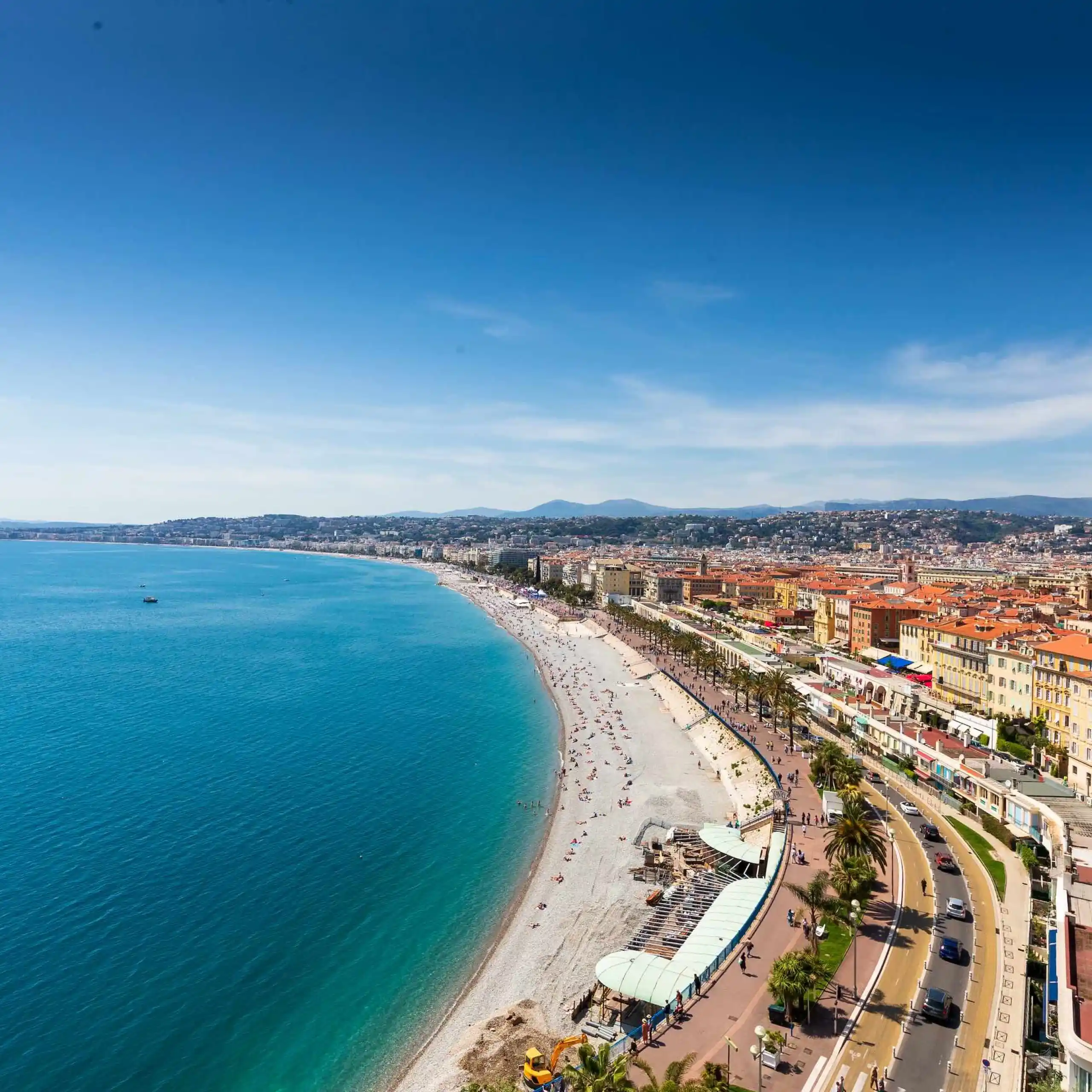
Before You Walk Nice’s Promenade, Walk In Here First
Most people arrive in Nice and head straight for the water. Fair enough. The Promenade des Anglais has earned its reputation, and after a long flight or a slow train down from Paris, the Mediterranean entices. But along that same waterfront, the city has built something that rewards a slight detour before the sunbathing, swimming and meandering begin: a fifteen-minute stop that changes how you experience this spectacular city.
TheCentre Nice Patrimoine Mondialsits along the waterfront at 75 quai des États-Unis, in a building modest enough that y…
Here’s the twist that makes Nice’sUNESCOstory more interesting than the usual “beautiful coastal city” pitch: Nice wasn’t built for summer at all. For roughly two centuries, from the mid-1700s to the mid-1900s, the city reinvented itself as a winter refuge for European aristocracy fleeing the cold. Crowned heads, industrialists, and assorted nobility arrived each winter, and the city welcomed them with villas, grand hotels, palm-lined promenades, and architecture pulled from wherever those visitors happened to be from. That cosmopolitan layering (Russian, English, Italian, Belle Époque everything) is precisely what UNESCO recognized on July 27, 2021, when it added Nice to theWorld Heritage Listunder the designation “Nice, winter resort town of the Riviera.” The listed zone covers 522 hectares, and the case for it rested on a specific UNESCO criterion: evidence of a substantial exchange of cultural influences that shaped architecture, urban planning, and landscape design over time.
Once you know that, the Promenade des Anglais stops being just a pretty place to walk. It becomes the physical record of a two-hundred-year experiment in hospitality.
A dozen or so landmark buildings familiar to locals (Villa Masséna, the Hôtel Negresco, the eccentric Château de l’Anglais on Mont Boron) are presented with enough context to explain what makes each one architecturally exceptional, and where its influences came from. At the back of the room, a relief map of the city becomes a screen: a short film, translated into nine languages, projects directly onto the topography, tracing Nice’s growth from the Château hill outward as the winter-visitor economy built it up, neighborhood by neighborhood.
Olivier-Henri Sambucchi, the center’s director and Nice’s chief heritage curator, has said the goal of the relief map was to let the model itself narrate, interactively, how the city was constructed by and for its winter residents.