West Hollywood: Small City, Big Stage
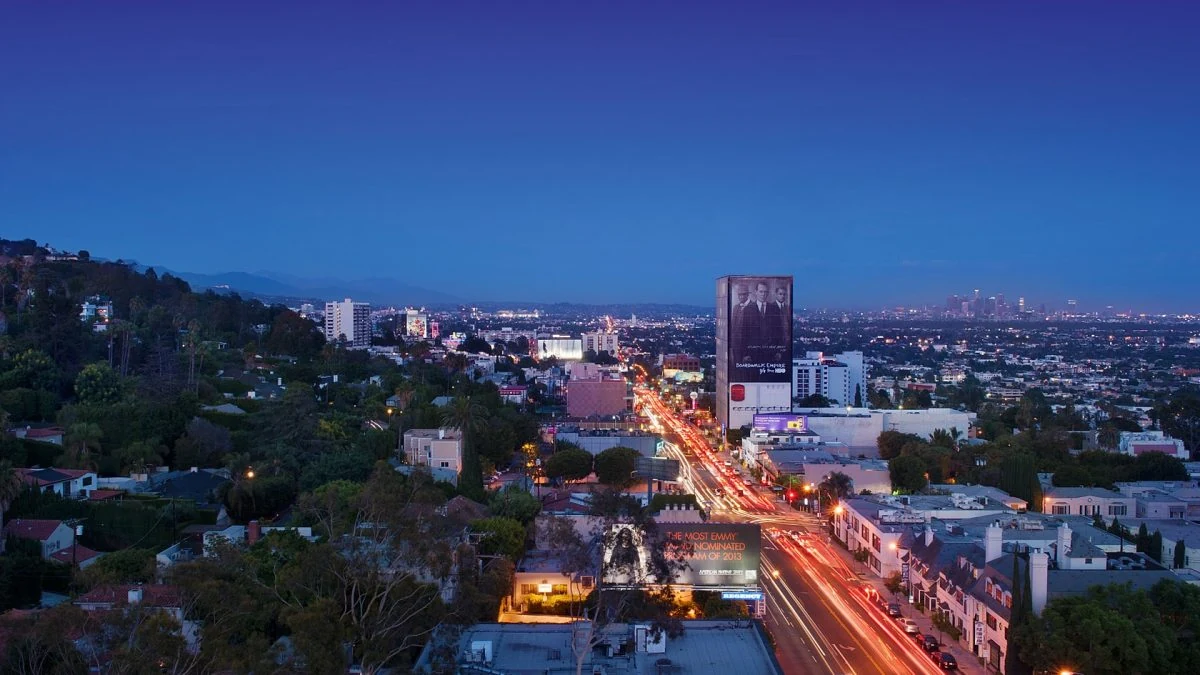
West Hollywood's famed Sunset Strip
Compact in size but oversized in influence,
West Hollywood
is the rare L.A. enclave that functions as both scene and setting. With a population of less than 40,000 and a footprint of less than two square miles, West Hollywood easily could be overshadowed by its Hollywood and Beverly Hills neighbors. Yet, it commands international attention thanks to its starring roles in hospitality, cuisine, wellness, design, and yes, inclusivity. WeHo is where the entertainment industry decompresses, recalibrates, and gets red carpet ready. This is where the business of entertainment meets the pleasure of it. But here, anyone can partake in power lunches on Sunset and transformative spa treatments. Visitors come for the electric mix of old-school glamour and cutting-edge culture. They stay for the walkability, the style-conscious hotels, and the sense that anything could happen on any given night—and often it does.
A Bit of History
Before it became a cultural flashpoint, West Hollywood was a patchwork of ranch land, railway stops, and prohibition-era speakeasies. It was an unincorporated stretch that thrived on being just outside the reach of L.A.’s stricter laws. By the 1920s, it had attracted Hollywood studios, mobsters, and movie stars in equal measure. The Sunset Strip gained notoriety for its glamorous clubs and clandestine dealings, while the area’s early embrace of LGBTQ+ rights set the stage for a progressive, proudly independent identity. Officially incorporated as a city in 1984, West Hollywood has always preferred character over conformity, a reputation it continues to embrace, and cultivate.